When Being “THE Pub” Means You're Not A Bar
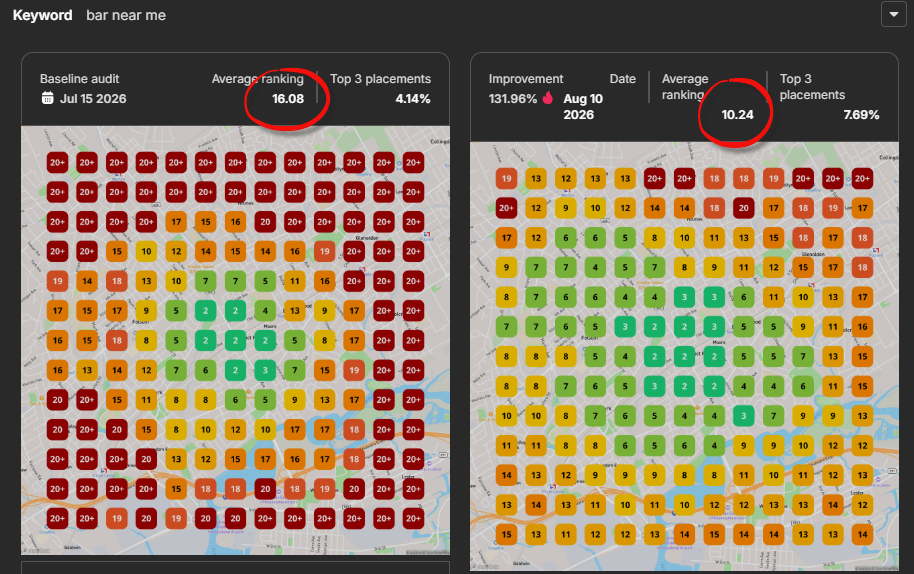
It can be the place regulars call “the pub” and also the place that shows up when someone nearby searches “bar near me.”
That is not a contradiction. That is simply fuller coverage of what the brand already represents in the real world.
A Marty Magee’s Story
There’s a weird, almost backwards problem that only truly loved local spots run into.
If you’re Joe Magee and you run Marty Magee’s, that is a great problem to have.
You’ve spent years building a neighborhood institution. The issue now is that people standing nearby are often not searching for “Irish pub near me.” They are searching for “bar near me,” “neighborhood bar,” or “best bar nearby.”
And if a business has been talked about for years mostly as a “pub,” that can create a strange visibility wrinkle.
The accidental side effect of success
For years, the smartest thing a local brand could do was let the community talk.
Let customers check in. Let fans post photos. Let regulars leave comments. Let people share live music clips, game day moments, bar food shots, and tagged nights out with friends.
That kind of public goodwill is what builds a legendary local business.
It is also what builds a very specific public identity.
If most of the language floating around a place is “pub,” “Irish pub,” “Guinness,” “pub night,” and “St. Paddy’s,” then over time that business becomes strongly associated with those words.
That is not bad. In fact, it is proof the brand worked.
But it can quietly narrow the range of search language connected to the business, especially when nearby customers are using broader terms like “bar near me.”
The search is broader than the reputation
This is where a great local brand can run into a funny modern problem.
In real life, Marty Magee’s is not just a pub. It is a bar. It is a neighborhood bar. It is the kind of place people mean when they say they want somewhere local, familiar, lively, and worth going back to.
But online, a business can become over-associated with just one version of itself.
That means the reputation is strong, but the phrasing around that reputation may be narrower than the way new customers search.
A person standing .4 miles away from Marty Magee’s may type:
- bar near me
- neighborhood bar near me
- local bar with live music
- best bar nearby
That person may be looking for exactly the kind of place Marty Magee’s already is.
The only issue is whether enough of the public language around the brand reflects that.
This is not a rebrand
That is the important part.
This is not about changing what Marty Magee’s is.
This is not about replacing “pub” with “bar” or pretending the Irish pub identity does not matter.
It is about broadening the story so the language matches the full reality of the business.
Marty Magee’s can be an Irish pub and a neighborhood bar.
It can be the place regulars call “the pub” and also the place that shows up when someone nearby searches “bar near me.”
That is not a contradiction. That is simply fuller coverage of what the brand already represents in the real world.
Leveraging the goodwill that already exists
The good news is that successful brands do not need to manufacture this from scratch.
The authority is already there.
The reviews are already there. The stories are already there. The customer loyalty is already there. The community already sees Marty Magee’s as a default answer when someone wants a good local bar experience.
All that built-in goodwill is what makes this opportunity so valuable.
The brand has already earned trust. It has already earned memory. It has already earned repeated mention across social platforms, photos, conversations, and reviews.
Now the goal is simply to make sure the public vocabulary around that goodwill has a fair mix of:
- pub
- Irish pub
- bar
- bar near me
- neighborhood bar
- local bar
That is not forcing anything.
It is making sure the language surrounding the brand reflects the full range of what customers already experience.
Why this matters for nearby searches
A lot of local discovery now starts with broad intent.
People do not always search with perfect category language. They search fast, casually, and from wherever they are standing.
They type “bar near me” because it is simple.
If Marty Magee’s already has the atmosphere, loyalty, drinks, food, events, and neighborhood identity those searchers want, then the content around the brand should support that reality.
That means broadening the topic footprint around Marty Magee’s so it is more consistently connected to “bar” language, not just “pub” language.
Same place. Same customers. Same authority.
Just a broader narrative.
The real opportunity for legendary local brands
This is why the issue is so niche.
It mostly affects places that have already won.
New businesses struggle because nobody is talking about them.
Legendary businesses can struggle because everybody is talking about them in only one lane.
That is a much better problem to have.
And it is fixable.
When a place like Marty Magee’s starts broadening how it is described across articles, posts, comments, videos, captions, and community conversation, it does not dilute the brand.
It expands the number of ways people can discover what locals already know.
The simple version
Marty Magee’s does not need less “pub.”
It needs a better balance of “pub” and “bar.”
That’s it.
The goodwill is already there. The local authority is already there. The neighborhood recognition is already there.
Now the story simply needs to reflect the broader language people actually use when they are nearby, searching fast, and looking for a great bar.
Boom. Just like that.

The Emerald Triangle: DelCo Irish History Docuseries — and the Authority Engine Behind It